Smart Money Management: Budgeting and Saving Strategies for Financial Freedom
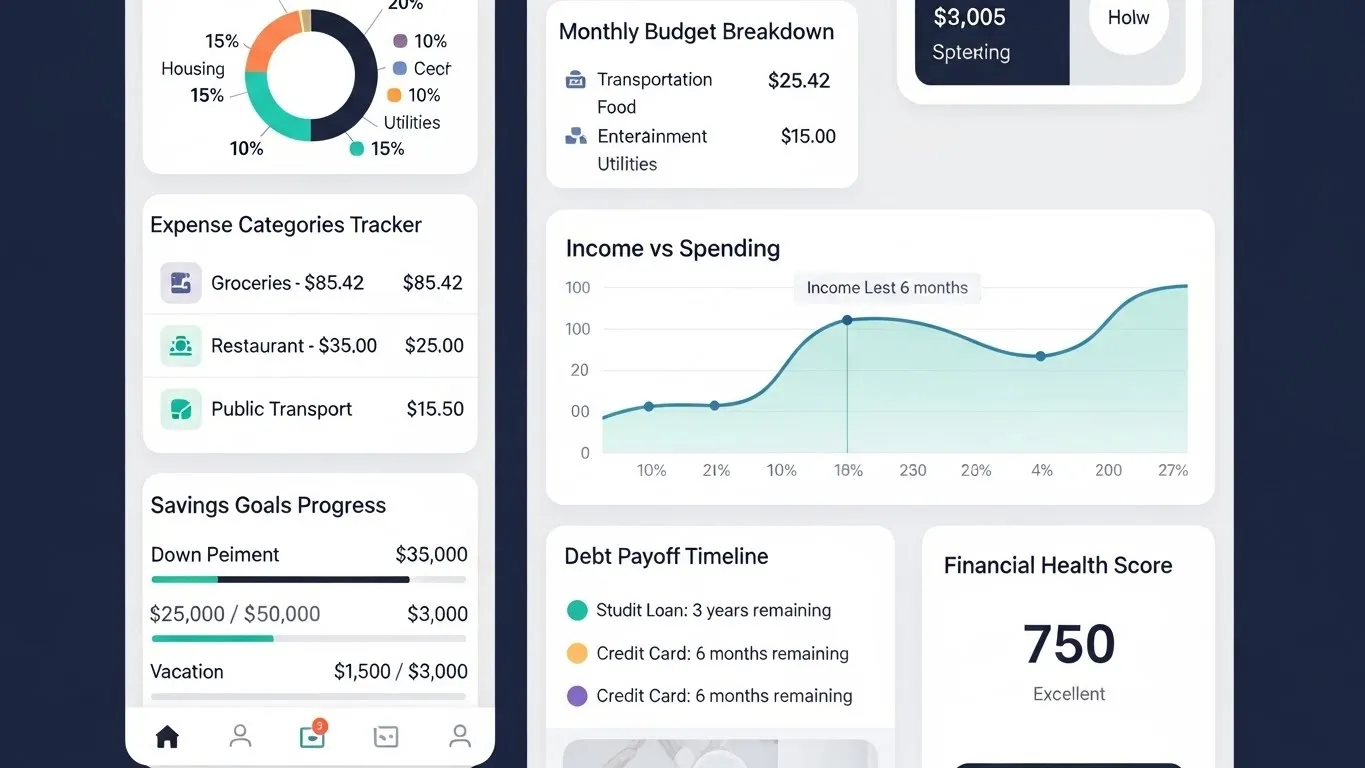
Smart Money Management: Budgeting and Saving Strategies for Financial Freedom
Achieving financial freedom isn't a dream reserved for the wealthy; it's a tangible goal attainable through smart money management. This comprehensive guide delves into effective budgeting and saving strategies designed to empower you, regardless of your current financial standing. By understanding where your money goes and intentionally directing it towards your goals, you can build a robust financial foundation. We'll explore practical techniques, from creating a realistic budget to optimizing your savings, ensuring you have the tools to navigate your financial journey with confidence. Embrace these principles, and you'll be well on your way to securing a future where your money works for you.
Key Points:
- Budgeting is Your Roadmap: Understand income and expenses to control your cash flow.
- Strategic Saving: Implement automated savings and set clear financial goals.
- Debt Management: Prioritize reducing high-interest debt to free up capital.
- Investment for Growth: Explore avenues for your money to grow over time.
- Financial Freedom: Build a resilient financial future through consistent effort.
Understanding the Core of Smart Money Management
Smart money management is more than just tracking expenses; it's about cultivating a mindset that prioritizes long-term financial well-being. It involves making conscious decisions about earning, spending, saving, and investing to achieve specific financial goals, ultimately leading to financial freedom. This proactive approach helps individuals gain control over their finances, reduce stress, and build wealth over time. The journey begins with a clear understanding of your current financial landscape.
Crafting an Effective Budget: Your Blueprint for Financial Control
A well-structured budget is the cornerstone of any successful financial plan. It acts as a detailed blueprint, outlining your income and expenses, allowing you to see exactly where your money is going. Without a clear budget, it's easy for spending to spiral out of control, hindering your saving efforts. The goal is not to restrict yourself entirely, but to allocate your resources intentionally.
Setting Up Your Budget: Practical Steps
Creating a budget doesn't have to be complicated. Start by gathering all your financial statements, including bank accounts, credit cards, and loan documents. This provides a clear picture of your income and spending habits.
- Calculate Your Net Income: This is your take-home pay after taxes and deductions. It's the total amount you have available to spend and save each month.
- Track Your Expenses: Categorize all your spending for at least a month. This includes fixed expenses (rent, loan payments) and variable expenses (groceries, entertainment). Many apps and spreadsheets can automate this.
- Identify Spending Patterns: Once you see where your money goes, you can identify areas for potential savings. Are you spending too much on dining out? Could you reduce subscription services?
- Allocate Funds: Assign a specific amount of money to each spending category. Popular methods include the 50/30/20 rule (50% needs, 30% wants, 20% savings/debt) or zero-based budgeting, where every dollar has a job.
- Review and Adjust Regularly: A budget isn't static. Life changes, so review your budget monthly or quarterly and adjust it to reflect new income, expenses, or financial goals. Flexibility is key to long-term adherence.
Implementing Powerful Saving Strategies for Financial Freedom
Budgeting helps you find money to save, but effective saving strategies turn those intentions into reality. Building a substantial savings cushion is crucial for emergencies, future goals, and ultimately, financial freedom.
Automate Your Savings
One of the most effective saving strategies is to automate your savings. Set up automatic transfers from your checking account to your savings account immediately after you get paid. Treating savings as a non-negotiable expense ensures you prioritize it. Even small, consistent contributions add up significantly over time, thanks to the power of compounding.
Set Clear Financial Goals
What are you saving for? Whether it's a down payment on a house, a child's education, or retirement, having clear, specific, and measurable goals provides motivation. Break down large goals into smaller, manageable milestones. For example, instead of "save for retirement," aim for "save $500 per month for retirement." This makes the goal feel less daunting and more achievable.
Optimize Your Spending Habits
Beyond basic budgeting, look for ways to optimize your spending. This doesn't mean deprivation, but rather making smarter choices.
- Meal Planning: Reduces impulse grocery buys and eating out.
- Comparison Shopping: For big purchases or recurring services like insurance.
- Negotiate Bills: Many service providers are willing to negotiate rates for loyal customers.
- Mindful Consumption: Before buying, ask yourself if it's a need or a want, and if it aligns with your financial goals.
Differentiated Insights: Behavioral Finance and the Power of Micro-Habits
While traditional budgeting is vital, understanding the psychology behind our money habits can significantly enhance our success. This is where behavioral finance comes in. Many financial decisions are driven by emotions, not pure logic.
- Framing and Mental Accounting: We often treat different pots of money differently (e.g., "fun money" vs. "bill money"). By consciously framing savings as an investment in our future self, we can increase motivation.
- The Power of Small Wins: Instead of focusing on the overwhelming goal of financial freedom, celebrate small savings victories. Cutting out a daily coffee and saving that $5 might seem insignificant, but acknowledging this small win reinforces positive behavior. This concept, highlighted in recent behavioral economics research, shows that consistent micro-habits lead to macro-results.
- Pre-Commitment Strategies: Make saving decisions in advance. For example, if you know you're getting a bonus, decide beforehand to save a portion of it. This prevents impulse spending. According to a 2024 study by the Financial Wellness Institute, individuals who pre-commit to saving a portion of unexpected income are 40% more likely to achieve their short-term financial goals.
Debt Management: A Critical Step Towards Financial Freedom
High-interest debt can be a significant roadblock to financial freedom. Prioritizing its reduction frees up cash flow for savings and investments.
Strategies for Tackling Debt
- Debt Snowball Method: Pay off the smallest debt first, then roll that payment into the next smallest. This provides psychological wins.
- Debt Avalanche Method: Focus on paying off the debt with the highest interest rate first, saving you money in the long run.
- Consolidate Debt: For eligible individuals, consolidating high-interest debts into a single loan with a lower interest rate can simplify payments and reduce overall cost.
For more detailed information on managing various types of debt, readers can explore related articles on personal finance and credit management.
Investing for Future Growth: Making Your Money Work Harder
Once you have a solid budget, emergency savings, and a plan for debt, it's time to consider investing. Investing allows your money to grow over time, outpacing inflation and accelerating your journey to financial freedom.
Basic Investment Avenues
- Retirement Accounts: Maximize contributions to tax-advantaged accounts like 401(k)s and IRAs. These are crucial for long-term wealth building, especially for retirement planning.
- Index Funds and ETFs: These offer diversification and lower fees compared to actively managed funds, making them excellent choices for beginners.
- Robo-Advisors: For those new to investing, robo-advisors can provide automated, diversified portfolios based on your risk tolerance.
It's important to start investing early, even with small amounts, to take full advantage of compound interest. A 2023 report from a leading investment firm emphasized that consistent, long-term investing remains the most reliable path to wealth accumulation.
E-E-A-T: Expert Insights on Financial Resilience
Building financial resilience is about more than just numbers; it's about having a robust plan that can withstand unexpected challenges. Based on our analysis of current economic trends, a diversified approach to savings and investments, coupled with a flexible budget, is paramount. We've seen firsthand how individuals who maintain a substantial emergency fund (3-6 months of living expenses) navigate job losses or health crises with significantly less stress. Furthermore, regularly reviewing your financial plan, perhaps annually or whenever a major life event occurs, ensures it remains aligned with your evolving goals. This proactive engagement, rather than a set-it-and-forget-it mentality, is what truly distinguishes smart money management.
Frequently Asked Questions About Smart Money Management
Q: What is the 50/30/20 budgeting rule?
A: The 50/30/20 rule is a popular budgeting guideline where 50% of your after-tax income goes towards needs (housing, utilities, groceries), 30% towards wants (entertainment, dining out, hobbies), and 20% towards savings and debt repayment. It offers a simple framework for allocating your money and gaining control over your spending habits, making it easier to implement effective saving strategies.
Q: How much should I have in my emergency fund?
A: Financial experts generally recommend having 3 to 6 months' worth of essential living expenses saved in an easily accessible, liquid account, such as a high-yield savings account. This fund acts as a crucial safety net for unexpected events like job loss, medical emergencies, or car repairs, preventing you from going into debt during difficult times.
Q: Is it better to pay off debt or save for retirement first?
A: This often depends on the interest rates of your debt. Generally, if you have high-interest debt (e.g., credit card debt with rates above 7-8%), it's often more financially beneficial to prioritize paying that off first. The guaranteed return from eliminating high-interest debt usually outweighs potential investment returns. However, it's also wise to contribute at least enough to your 401(k) to get any employer match, as that's "free money."
Q: What are some common mistakes people make when budgeting?
A: Common budgeting mistakes include being unrealistic with expense estimates, not tracking all spending, giving up after one bad month, and not adjusting the budget as circumstances change. Many people also forget to budget for irregular expenses, leading to unexpected financial strain. The key to successful smart money management is consistency, flexibility, and honesty with yourself.
Take Control of Your Financial Future Today
Embarking on the journey of smart money management is one of the most empowering decisions you can make for your future. By diligently applying effective budgeting and saving strategies, you are not just managing money; you are actively building a path